
When buying a used forklift, capacity is one of the most important specifications to understand. Choosing a forklift with too little capacity can affect safety and productivity, while buying a machine that is much larger than necessary may increase purchase price, fuel consumption, and operating costs.
Forklift capacity is also more complicated than simply choosing between a 2.5-ton, 3-ton, or 5-ton machine. The actual weight a forklift can safely lift depends on load dimensions, load center, lift height, attachments, and the forklift’s configuration.
This guide explains how used forklift capacity works and how to choose the right capacity for your application.
What Is Forklift Capacity?
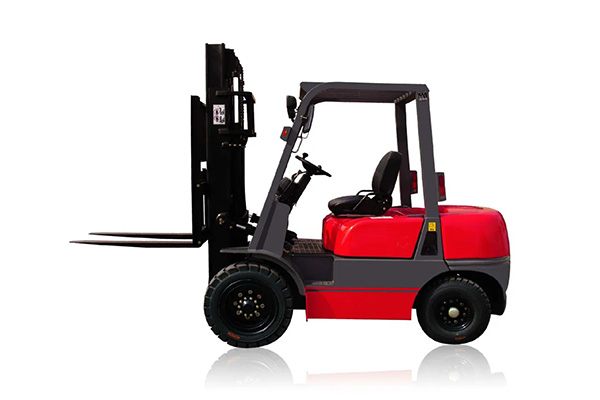
Forklift capacity refers to the maximum load a forklift is designed to lift safely under specified conditions.
For example, a forklift rated at 3,000 kg may be able to lift a 3-ton load when the load center and lifting height remain within the manufacturer’s rated conditions.
Common forklift capacities include:
| Rated Capacity | Typical Applications |
|---|---|
| 1.5–2 tons | Light warehouse and indoor material handling |
| 2.5 tons | Warehouses, factories, pallet handling |
| 3–3.5 tons | General industrial and logistics applications |
| 5 tons | Heavy materials, machinery, steel products |
| 7–10 tons | Ports, construction sites and heavy industry |
| 10+ tons | Containers, large equipment and specialized industrial loads |
Among used forklifts, 2.5-ton and 3-ton models are especially common because they can handle many standard warehouse and industrial jobs.
Rated Capacity vs Actual Lifting Capacity
A forklift’s advertised capacity does not mean it can lift that weight under every operating condition.
The rated capacity is normally calculated according to a specified:
- Load center
- Mast height
- Fork configuration
- Attachment setup
When these conditions change, the forklift’s actual lifting capacity may decrease.
For example, a forklift rated for 5 tons at a standard load center may not safely lift the same 5-ton load if the load is unusually long or its center of gravity is positioned farther forward.
Therefore, buyers should look at the forklift data plate or load capacity chart, not only the model’s nominal tonnage.
Understanding Forklift Load Center
The load center is the horizontal distance from the vertical face of the forks to the center of gravity of the load.
A common rated load center for many forklifts is approximately 500 mm, although specifications vary by model.
For a uniformly distributed load that is 1,000 mm deep:
Load center = 1,000 ÷ 2 = 500 mm
If the same load becomes 1,400 mm deep, the load center may increase to approximately 700 mm.
As the load center moves farther away from the forklift, the load creates greater leverage on the machine. This reduces the amount of weight the forklift can safely handle.
Why Load Center Matters
Suppose you are comparing two loads:
- 3,000 kg pallet with a 500 mm load center
- 3,000 kg long material with a 750 mm load center
Although both loads weigh exactly 3 tons, the second load places greater forward force on the forklift.
The forklift may therefore need a higher rated capacity to handle the longer load safely.
How Lift Height Affects Forklift Capacity
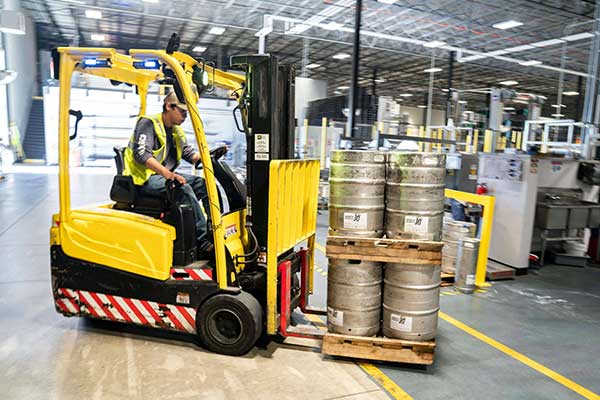
Maximum lifting height is another important factor when choosing a used forklift.
A forklift might be rated for a certain capacity at a relatively low mast height, but its allowable load may decrease when lifting materials to higher levels.
This becomes particularly important in:
- High-bay warehouses
- Container loading operations
- Multi-level pallet storage
- Manufacturing plants with tall racks
For example, if your normal loads weigh 3 tons but must regularly be lifted several meters high, choosing a forklift rated at exactly 3 tons may provide insufficient capacity at the required height.
Check the manufacturer’s residual capacity specification for the intended lift height.
What Is Residual Capacity?
Residual capacity is the amount of weight a forklift can actually lift under specific operating conditions after factors such as mast height, load center, and attachments are considered.
This can be significantly lower than the forklift’s nominal capacity.
For example:
Nominal capacity: 5,000 kg
Load center: 500 mm
High lift height or attachment installed: residual capacity may drop below 5,000 kg.
For buyers handling heavy or oversized materials, residual capacity is often more important than the capacity shown in the forklift model name.
How Attachments Affect Forklift Capacity
Attachments change the forklift’s center of gravity and can reduce usable lifting capacity.
Common forklift attachments include:
- Side shifters
- Fork positioners
- Bale clamps
- Paper roll clamps
- Rotators
- Extended forks
Attachments add their own weight and often move the load farther away from the mast.
As a result, a forklift equipped with attachments may have a lower residual capacity than the same forklift using standard forks.
When buying a used forklift with an attachment already installed, check whether the capacity plate has been updated for that configuration.
Choosing Capacity Based on Your Typical Load
The best way to select forklift capacity is to begin with your actual materials.
Determine:
Maximum load weight
Identify the heaviest load the forklift will normally handle.
Load dimensions
Measure pallet or material length, width, and height. Long loads may create a larger load center even when their total weight is relatively low.
Required lift height
Determine the highest point at which the load needs to be placed.
Attachments
Consider whether the forklift requires side shifters, clamps, extended forks, or other equipment.
These factors provide a more accurate capacity requirement than simply selecting a forklift based on pallet weight.
Should You Choose Extra Forklift Capacity?
In many applications, selecting some capacity above the normal working load can be practical.
For example, if your regular loads are close to 2,500 kg, a 3-ton or 3.5-ton forklift may provide more operating flexibility than a forklift rated at exactly 2.5 tons.
Extra capacity can be useful when:
- Load weights vary
- Pallets are longer than standard
- Attachments are installed
- Loads need to be lifted higher
- Future operations may involve heavier materials
However, unnecessarily oversized forklifts can also have disadvantages, including higher purchase costs, larger turning radius, increased fuel consumption, and greater machine weight.
The goal is therefore not to buy the largest forklift available, but to choose sufficient capacity for the actual job.
Common Used Forklift Capacity Classes
2.5-Ton Used Forklift
A 2.5-ton forklift is commonly used in warehouses, factories, distribution centers, and general pallet handling.
It offers a good balance between lifting capacity, maneuverability, and operating cost.
Typical applications include:
- Packaged goods
- Building materials
- Manufacturing components
- Standard pallets
3-Ton to 3.5-Ton Used Forklift
These forklifts are suitable for slightly heavier industrial applications and businesses that need more capacity margin.
They are commonly found in:
- Machinery factories
- Logistics yards
- Construction material warehouses
- Manufacturing facilities
For buyers whose regular loads approach 2.5 tons, moving up to a 3-ton or 3.5-ton forklift may provide additional flexibility.
5-Ton Used Forklift
A 5-ton forklift is designed for heavier industrial materials.
Typical loads include:
- Steel
- Stone
- Machinery
- Large building materials
- Heavy manufacturing components
These forklifts are generally larger and require more operating space than standard warehouse forklifts.
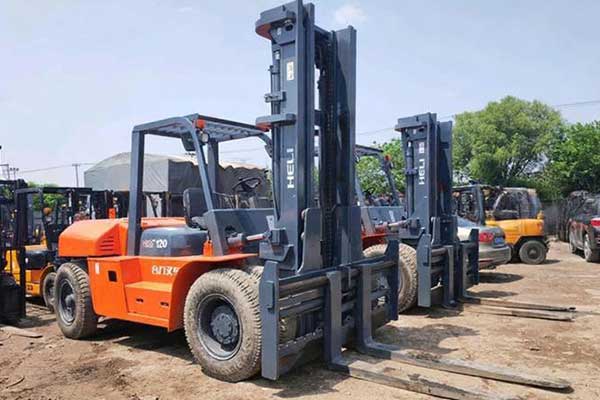
10-Ton and Heavy-Duty Forklifts
Forklifts in the 8-ton, 10-ton, 12-ton, and higher capacity ranges are commonly used for demanding industrial applications.
Typical industries include:
- Ports
- Heavy manufacturing
- Machinery handling
- Steel processing
- Large construction projects
Buyers should pay particular attention to load center, mast configuration, tire condition, hydraulic performance, and residual capacity when selecting heavy-duty used forklifts.
Capacity and Forklift Size
Higher capacity usually means a physically larger forklift.
As forklift capacity increases, you may also see increases in:
- Machine width
- Overall length
- Counterweight size
- Turning radius
- Tire size
- Machine weight
This matters if the forklift will operate inside a warehouse or between narrow storage aisles.
A 5-ton forklift may easily handle your load, but it may not be practical if your operating space was designed for compact 2.5-ton forklifts.
Capacity should therefore be considered together with working space and maneuverability.
Diesel vs Electric Forklift Capacity
Both diesel and electric forklifts are available across a wide range of capacities.
Electric forklifts are commonly used for light and medium-duty indoor material handling because of their low noise and zero local exhaust emissions.
Diesel forklifts are widely used for outdoor and heavy-duty applications, especially where longer operating hours, rough surfaces, and heavier materials are involved.
The correct choice depends more on the working environment than capacity alone.
Example: Choosing Between a 3-Ton and 5-Ton Used Forklift
Consider a company handling loads between 2,000 and 2,800 kg.
If the materials are standard pallets with a normal load center and relatively low lifting height, a 3-ton forklift may be suitable.
However, suppose the company also handles long steel products weighing approximately 2,800 kg.
Because these materials have a larger load center, the actual capacity requirement increases. In this situation, a 3-ton forklift could have limited residual capacity, while a 5-ton forklift may provide a more appropriate operating margin.
This example shows why load dimensions can be just as important as load weight.
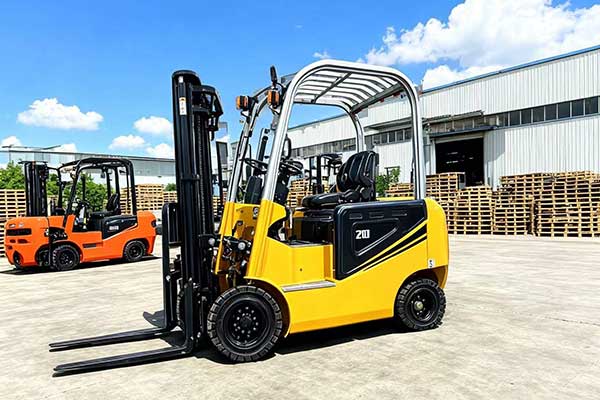
Check the Used Forklift Capacity Plate Before Buying
Before purchasing a used forklift, inspect its capacity plate carefully.
The plate can provide important information including:
- Rated capacity
- Load center
- Maximum lifting height
- Mast configuration
- Attachment configuration
- Machine weight
If the forklift has been modified or fitted with different attachments, confirm that the current configuration matches the stated capacity.
Do not determine safe lifting capacity only from the forklift model number or seller description.
How to Choose the Right Used Forklift Capacity
A suitable forklift should match the real working conditions rather than just the maximum load weight.
Before choosing a machine, consider:
- The heaviest material you need to lift.
- The dimensions and center of gravity of the load.
- The maximum lifting height.
- Whether attachments will be installed.
- Available aisle and operating space.
- Indoor or outdoor working conditions.
- Possible future increases in load requirements.
For many general industrial applications, 2.5-ton to 3.5-ton used forklifts provide a practical balance of capacity and maneuverability. Heavy materials may require 5-ton, 10-ton, or larger machines.
Conclusion
Choosing the right used forklift capacity requires more than comparing rated tonnage. Load center, lifting height, attachments, material dimensions, and working space can all affect the forklift’s real usable capacity.
A forklift should have enough capacity to handle your heaviest loads safely without being unnecessarily oversized.
Roadsky supplies used forklifts in different capacity ranges, including models from well-known manufacturers. Contact us with your required load weight, lift height, and working conditions, and we can help you select a suitable used forklift for your application.